What is Adaptive Information Processing? (In Plain Language)
- catherine lee
- Apr 21, 2025
- 3 min read
Ever wonder why some experiences feel like they’re stuck on repeat — even years later?
Maybe something small triggers a big emotional reaction, or you keep reliving a moment from the past that you wish you could let go of. Maybe an experience that created a negative belief about yourself— causing you to act in ways to avoid (which creates more problems, etc).
That’s where Adaptive Information Processing (AIP) comes in — a concept used in EMDR therapy that helps explain how our brains heal... and what happens when they can’t.
Let’s break it down in everyday language.
Your Brain Has a Built-In Healing System
Think of your brain like a super-organized library. Every experience you have gets sorted, labeled, and stored away properly.
Most of the time, this happens automatically. You feel something → understand it → learn from it → move on.
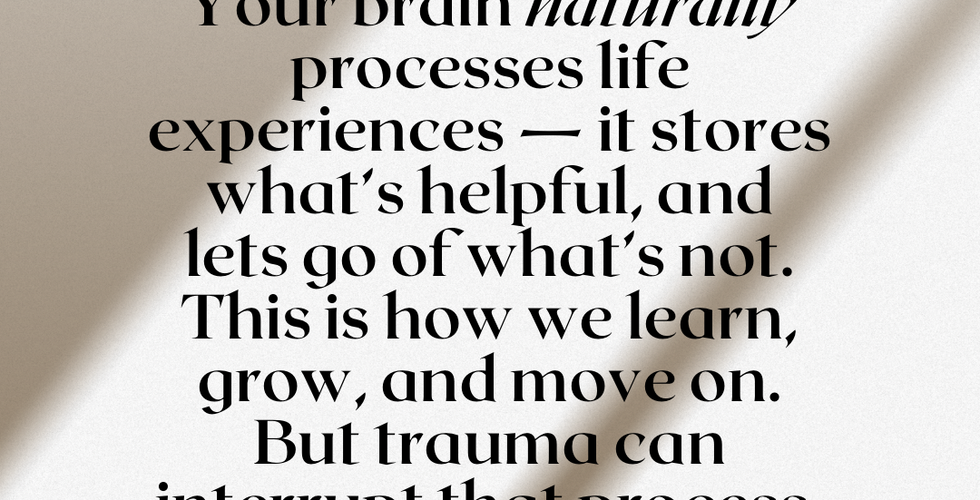
This is the brain’s natural processing system at work — just like your body heals a scrape, your mind heals from hard moments, too.
But Trauma Can Disrupt That System
When something too overwhelming, scary, or painful happens, your brain doesn’t always get the chance to process it fully.
Instead, it might “freeze” the memory in its raw, unprocessed form — complete with the emotions, body sensations, and negative beliefs you felt in that moment.
That’s why years later, you might still:
Flinch when someone raises their voice
Feel sick driving past a certain place
Believe, “It was my fault,” even if it wasn’t
It’s not because you’re broken — it’s because that memory is still stuck in survival mode.
Enter: Adaptive Information Processing (AIP)
The AIP model (used in EMDR therapy) says this:
Your brain wants to process and heal.Trauma just gets in the way.
Therapy — especially EMDR — helps you remove the block so your brain can finish the job.
So, How Does EMDR Use AIP?
EMDR therapy activates both sides of your brain using bilateral stimulation (like eye movements, tapping, or sound).
This helps:
Access the unprocessed memory
“Unfreeze” it
Reprocess it in a safe, supported way
Replace it with healthier, more adaptive beliefs
You still remember what happened — but it stops feeling like a threat. The memory becomes just that: a memory.
What Healing Looks Like
Before therapy, you might feel:
“I’m not safe.”“I’m helpless.”“It’s all my fault.”
After processing the memory with EMDR, those beliefs often shift to:
“I am safe now.”“I have choices.”“It wasn’t my fault.”
This is the power of Adaptive Information Processing — your brain healing itself once it’s given the right support.
Final Thoughts
If you’re struggling with stuck memories, anxiety, or trauma responses that don’t make sense on the surface — you’re not alone. It doesn’t mean you’re weak. It means your brain has been trying to protect you the best way it knew how.
Therapies like EMDR, built on the AIP model, are designed to help your brain do what it naturally wants to do: heal and move forward.
Curious if EMDR might be a good fit for you? I offer free consultation calls to talk through your goals, your story, and how therapy might support your healing.
**I have currently completed weekend 1 training of EMDR training and plan to complete training this summer!
Just finding this training to be so valuable and explaining the why behind it has been on my mind as I educate others about this model.







Comments